

A while back I did a series of posts with the catch-all title of “Worldwide Wednesday” where I interviewed folk from around the world and from a diverse range of create genres and whilst it fizzled out a while back, mostly due to “life” getting in the way, that spark to reignite this form of content literally dropped into my inbox with an email from Zack Buchman.
As the founder of Uncute™ and Furry Puppet Studio, Zack Buchman has spent years creating puppets, creatures and characters for television, music videos, brands and all sorts of projects in between. So when his email dropped into my inbox, I was curious so I popped together a list of questions and sent them over. What came back was a life story that I think you will agree is fairly unique.
Come with me on a journey as we get to know Zack, his beginnings, his influences, his achievements and his determination to live a creative life!
Trust me, you will be in awe.
What were you like as a child — were you always creative and making things?
Yes, always. I was the kid who would rather take something apart and put it back together differently than leave it as it was.
I drew constantly.
I was never satisfied with what already existed.
That obsession has never really gone away.
Do you remember the first puppet, creature, or character that truly fascinated you?
Probably Sesame Street.
I used to be terrified as a child by some of the more abstract characters that had no eyes. A specific moment that really stopped me was seeing Mummenschanz on The Muppet Show. These odd, silent figures with malleable faces somehow communicated more than anything I had ever seen.
I didn’t have the vocabulary for it at the time, but it planted something.
I kept going back to that feeling for years before I understood what it meant to me.
Were there any particular films, TV shows, books, or artists that shaped your imagination growing up?
Jim Henson is the big one.
What Henson demonstrated, over and over, is that the less you spell out, the more the audience brings to a character. Two foam shapes and a pair of well-placed eyeballs can create a deeper emotional connection than almost any CGI character, because the viewer fills in the gaps themselves.
That idea still runs through everything we make.
Early computer games were the other big influence, and it might sound strange to put them alongside Henson. But designers like Steve Purcell, who later directed at Pixar, were working at resolutions so low that they sometimes had to decide whether a single pixel would read as an eye or a nose – you couldn’t have both.
That extreme constraint forced them to keep only what was essential.
At what point did you realise that puppet making could become more than just a hobby?
It crept up on me.
I didn’t sit down one day and decide to design puppets. I tried animation first, and while it didn’t last, it taught me something important about how to approach character design.
What I found myself craving was the physical side: being able to feel the character, hand it to someone, watch their face change. There’s something magical about an inanimate object that suddenly seems alive in front of you, and once you’ve seen that happen you can’t stop chasing it.
At some point I looked around and realised that this was what I was actually doing with my life.
Did your family or teachers encourage your creativity when you were younger?
There was support, yes. But I never went to college, which I think turned out to be one of the defining facts about how I work.
It gave me an outsider’s perspective.
I had to go and find the people who knew things I didn’t know. Most of what I’ve learned came from being around people who were generous enough to share their knowledge with me.
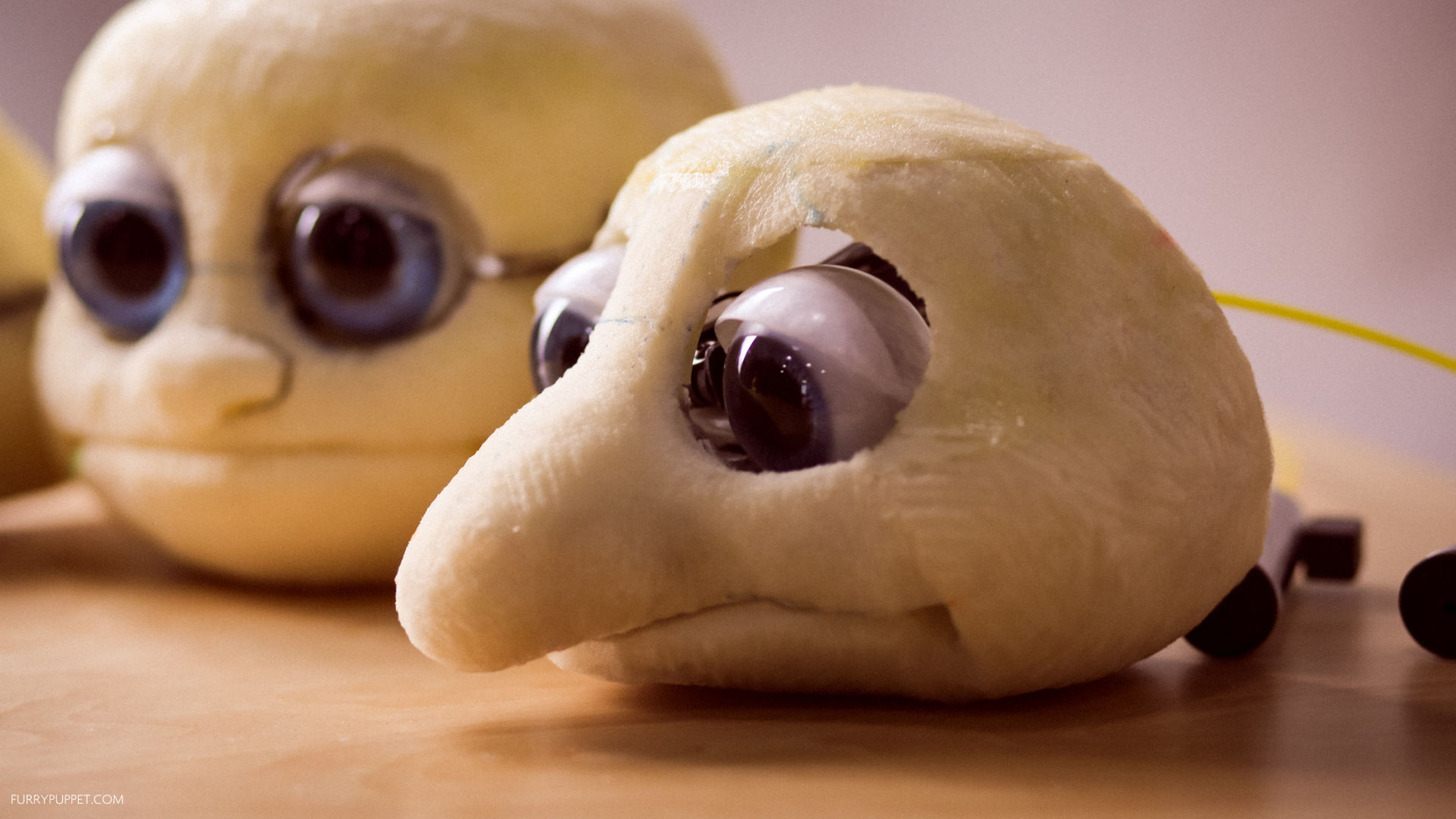
^ Foam heads with mechanical eyes, before adding the fabric.
What were the early days of starting the studio actually like behind the scenes?
Chaotic and exciting in equal measure and a lot of trial and error.
We couldn’t find the right fleece fabric on the market for a long time, so we eventually went ahead and manufactured our own. We called it “dream fleece“.
That probably tells you everything you need to know about how the studio started: we would hit a wall, decide we had no choice but to go around it, and that detour would teach us something we would use for years. It’s not always a glamorous process, but that’s how we work, and it’s what sets us apart.
Unlike in animation, you can feel the character with your hand.
Was there a particular project or breakthrough moment that made you think, “This could really work”?
The Missy Elliott and Pharrell Williams project.
We were asked to build marionettes in the likenesses of both artists for their music video, “WTF.”
It was completely outside my comfort zone. Marionettes are genuinely difficult to work with, and we were designing likeness characters for two recognisable musicians, then handing the strings to street performers and working with them to get the movement right.
The day we watched that footage back and it actually worked, it was a beautiful moment.

How would you describe the creative philosophy behind your work and your studio?
You have to be detail-oriented and plan well, but I always make sure there’s room for experimentation and for allowing the artists to leave their personal mark on the work.
I love working with talented people and I love trusting their creative judgment.
What do you think makes puppetry and practical creature work so emotionally engaging for audiences?
The interaction and the touch.
A puppet exists in the same physical space as the audience.
You can hear it, see it from every angle, touch it if you’re close enough. That creates an entirely different kind of connection than something you watch on a screen. And then there’s the moment when a puppeteer finds the character, and the suspension of disbelief just clicks. It’s alive.
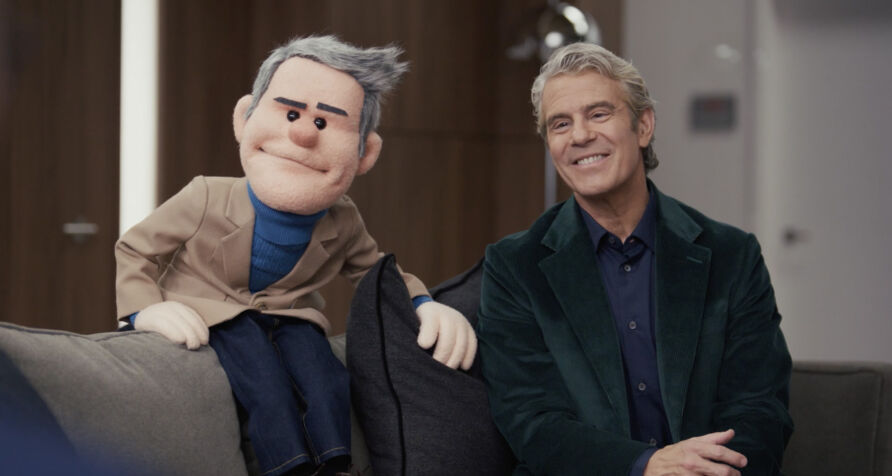
^ Likeness puppet of Andy Cohen, built for CNN — sitting next to the real thing – if you watch “Real Housewives”, you’ll get my excitement for this one! Lol!
How do you balance artistic creativity with the realities of running a business?
Very imperfectly, honestly.
The business side pulls your attention in a different direction from the making side.
What I’ve learned is that the best protection for the creative work is to stay close to the projects that genuinely excite you, even when there are more commercially comfortable options.
The work we’re proudest of has almost always come from following the interesting problem rather than the safe one.
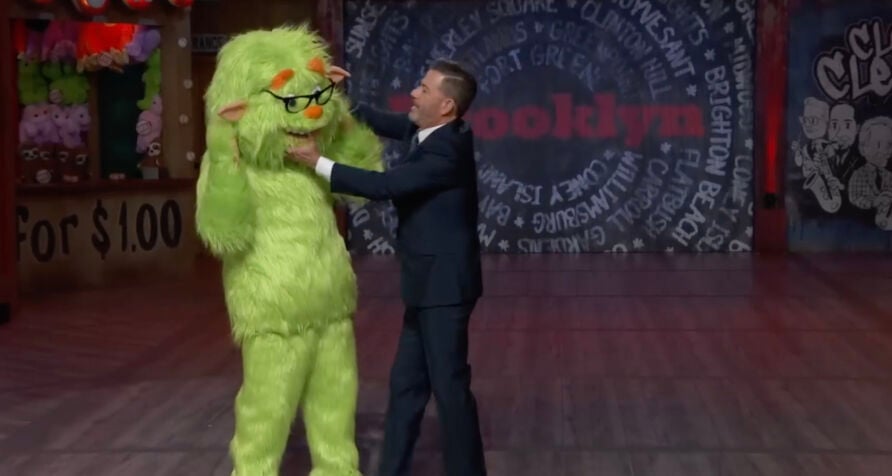
^ Frankie Focus, the mascot for New York’s phone-free schools initiative.
What skills or qualities do you think are most important for someone wanting to succeed in creative industries today?
Collaboration, first.
Find people whose skills are genuinely different from yours and work alongside them.
Some of my favourite creative moments have come from watching someone with a completely different sensibility approach a task from a completely different angle.
The other is persistence with an open mind. Not stubbornness, which closes you off, but the willingness to keep returning to an idea until it’s right, while staying genuinely curious about better ways to get there.
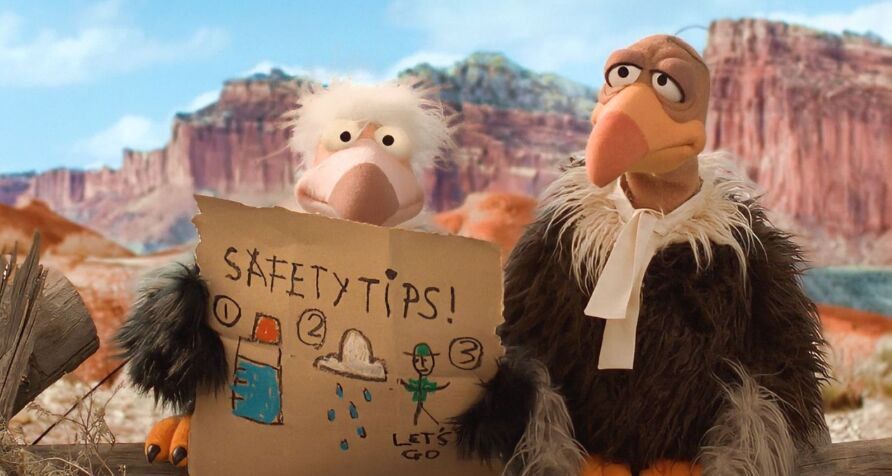
^ New vulture puppets we just completed.
If you could give your younger self one piece of advice at the beginning of your creative journey, what would it be?
Find the people who are generous with their knowledge, and be generous back.
I wasted a lot of time thinking I had to figure things out alone. It’s simply much more rewarding working with talented people that you like.
Want To Know More?
If you would like to see more of Zack’s incredible work, through his companies, you can find them here…
And here is a link to another article about Zack by Alicia de los Reyes for the Craft Industry Alliance.

What a fascninating branch of creativity, what a fascinating life and what an amazing journey!
What do you all think? Is this something that has fascinated you too…? I really enjoyed getting to know more about the history behind the creativity and how it all converged into the two businesses.
Anyway, I am hoping to do more interviews in the future so, if you have any suggestions, requests or recommendations please feel free to pop them in the comments section below.
If you’d like to see other interviews that I have conducted for this blog over the years, please feel free to have a nosey about …

Share the love!
If you find this post fun, entertaining or useful, please do consider sharing it to your fave social platform using the handy buttons below.
Also, if you are feeling flush, a coffee wouldn’t go amiss! *cheeky wink.


Ok, that’s it for this post. I hope that you have enjoyed your time here today and will subscribe to my email newsletter so that you can hear about future posts.
If have not already done so, please feel free to pop your email address in the box below and I will add you to the list (you can unsubscribe at anytime in the future if I bore you with too many).
In the meantime, thanks for stopping by and I look forward to seeing you next time!
Much love,
John.

