
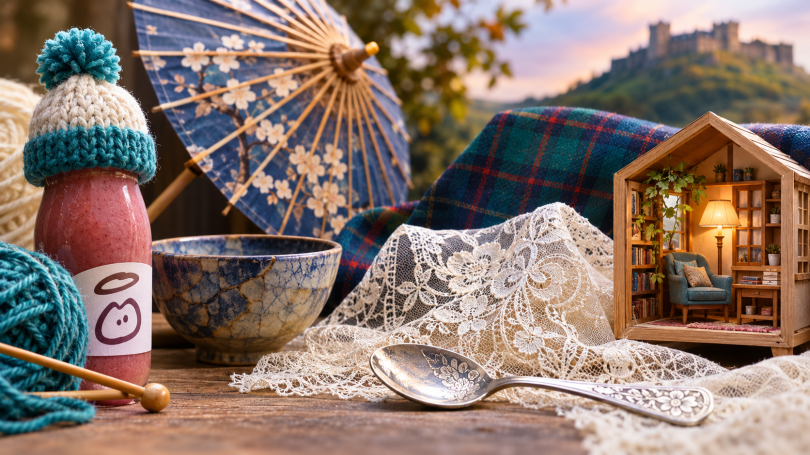
Every fortnight, I take a wander around the wider craft world to see what has been happening beyond my own particular pile of paper, card, cutting machines and all the other creative paraphernalia that somehow seems to reproduce when I am not looking. This time we have tiny knitted hats doing rather a lot of good, a new generation of Japanese artisans showing that traditional craft is anything but stuck in the past, seven Scottish makers being given some very welcome room to experiment, and an interesting new European scheme that could eventually give certain crafts the same sort of geographical protection that we already associate with things like Champagne and Stilton.
There are also miniature rooms for people who apparently feel their full-sized homes do not contain enough things to decorate, an Australian exhibition celebrating imperfection, some exquisite Irish lace heading into the world of couture, and even a new little die-cutting machine in a rather fetching frosted finish. So, altogether, a much more cheerful wander around the craft world this time.
Tiny hats, a big target and rather a lot of knitting

I am going to begin with something wonderfully simple. The innocent Big Knit, run in partnership with Age UK, is back, asking knitters and crocheters across the UK to make tiny woolly hats that will eventually appear on smoothie bottles. For every hatted bottle sold, 30p is donated to Age UK, and since the campaign began in 2003 it has raised more than £3.6 million to support older people. The latest national campaign is aiming for an extraordinary 1.5 million hats. Age UK has more details about the campaign here.
That is already quite an image: one and a half million tiny hats, none of which will ever keep anybody’s head particularly warm. But what I particularly liked this fortnight was seeing how that enormous national target translates into something very local. On the Isle of Wight, Age UK has challenged knitters and crocheters to make 20,000 hats, which could raise £6,000 for services supporting older Islanders. By 9 November, just a couple of weeks into the campaign, more than 2,000 hats had already arrived. OnTheWight has the local story here.
The money supports things including companionship services, digital help and practical information for older residents, so all of those little scraps of yarn ultimately become something rather more useful than a decorative bobble on top of a smoothie. There are free knitting and crochet patterns for different abilities too, including some that are considerably more ambitious than the traditional little bobble hat. I spotted lions, sombreros, apples, unicorns and even a post box among the examples. Age UK Isle of Wight has the patterns and local campaign details.
I think what I enjoy most about the Big Knit is that it asks very little of any individual person. Nobody has to knit 20,000 hats. You can make one. Somebody else can make three. A knitting group might make fifty. Eventually all of those very small contributions turn into something substantial.
Craft is particularly good at this sort of thing because so much of it is inherently incremental. One stitch does not look terribly impressive. A few thousand of them can become a jumper. One tiny knitted hat is amusing. One and a half million of them become several hundred thousand pounds for charity.
And if you happen to have some leftover yarn lurking in a cupboard — which I appreciate is an almost entirely hypothetical situation among crafters — you could even put some of it to useful work.
Find out about the Big Knit and download patterns.
Tokyo puts its younger traditional artisans in the spotlight
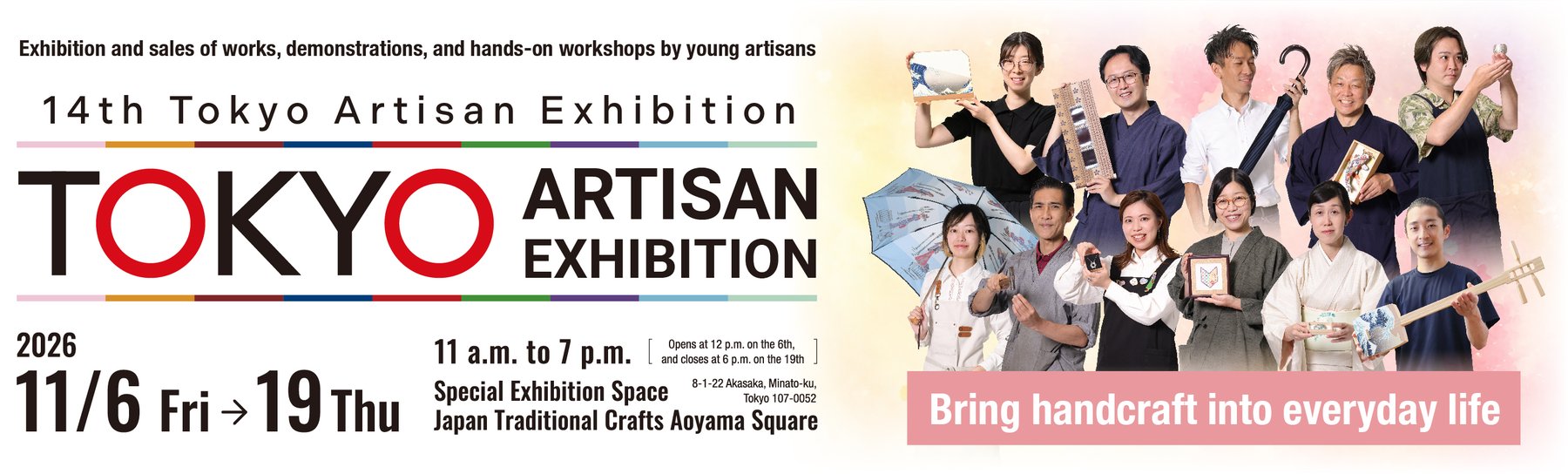
From tiny knitted hats in Britain to some rather beautiful traditional making in Japan. The 14th TOKYO Artisan Exhibition opened on 6 November at Japan Traditional Craft Aoyama Square and runs until 19 November. What makes this one particularly interesting is that the focus is specifically on younger artisans working in Tokyo-designated traditional crafts, with eleven makers representing nine different disciplines. Rather than simply putting finished objects in display cases, the exhibition includes live demonstrations, workshops and opportunities to speak directly to the makers about how their work is produced. The official exhibition page lists the makers and demonstrations.
The list of crafts is wonderful. There is hand-drawn Yuzen dyeing, traditional silverware, cloisonné enamel, Edo embroidery, woodblock printing, kimekomi fabric inlay, folding-screen mounting, shamisen making and even traditional Tokyo umbrella construction. During the exhibition, visitors can watch artisans sewing umbrella canopies, firing enamel, hammer-forming silver, embroidering, printing multicoloured woodblocks and stretching the skin used on a shamisen soundboard.
There are hands-on workshops too, and some of those sound particularly tempting. Visitors can try making a silver bookmark, create a kimekomi fabric-inlaid tray, decorate a miniature umbrella or even stamp their own design into a silver ice-cream spoon. Apparently silver’s high thermal conductivity allows the warmth of your hand to travel into the spoon and makes hard ice cream easier to scoop. This is exactly the kind of specialist craft knowledge I enjoy discovering because it manages to be both centuries old and immediately useful when faced with an inadequately softened tub of ice cream. The workshop programme is here.
What I particularly like, though, is the decision to put younger craftspeople at the centre of the event. We often hear traditional craft described in terms of preservation, which can accidentally make it sound as though the object is to keep something frozen exactly as it was. This exhibition feels rather different. The traditions are continuing because there are younger people actively learning them, practising them, selling the results and showing the public how they work.
That seems a much healthier definition of a living craft. You do not preserve a technique by placing its final surviving example behind glass. You preserve it by ensuring somebody still knows what to do with the tools.
Explore the TOKYO Artisan Exhibition and its demonstrations.
Seven Scottish makers get some room to experiment
Closer to home, Craft Scotland has announced the seven recipients of the 2026 Inches Carr Craft Bursaries. Four emerging makers are receiving £2,000 each, while three established makers receive £5,000, with the money available for things such as specialist training, research, residencies, new equipment and developing unfamiliar skills. Craft Scotland explains the bursary programme here.
Now, a funding announcement may not sound like the most thrilling craft story in the world, but I think the interesting part comes when you look at what the makers actually intend to do with it.
Edinburgh jeweller and enameller Elizabeth Jane Campbell plans to investigate alternative materials alongside vitreous enamel and undertake specialist training in finishing glass. Textile artist and tailor Alis Le May will continue exploring British wool, natural dyes and the rather beautiful process of preserving flowers within translucent layers of cloth. Ceramicist Camille Biddell wants to develop more complex mould-making techniques so that she can work with found textures on a larger scale.
Then there is jeweller Laura Cruikshank, who will use her bursary to strengthen her core metalworking skills and learn stone setting; metalsmith Militsa Milenkova, whose work involves deliberately compressing metal until it folds and buckles into unpredictable forms; and fashion designer and textile artist Kyra Suki Ho, who plans to train in traditional hand-sewn kiltmaking at the Edinburgh Kiltmakers Academy. You can meet all seven recipients here.
I find that last one particularly interesting because it demonstrates how support for contemporary craft does not always mean inventing an entirely new process. Sometimes innovation comes from learning an old one properly and then deciding what you want to do with it.
Perhaps that is the real value of small bursaries like these. They give makers permission to spend some time not knowing exactly what the outcome will be.
Creative work needs a certain amount of experimentation, and experimentation inevitably involves mistakes, dead ends and occasionally discovering that the brilliant idea you had on Tuesday was complete nonsense by Thursday. That is much easier to tolerate when every experimental hour does not immediately have to turn into something saleable.
So I rather like the idea that seven Scottish makers have just been given a little more room to play, learn and make glorious mistakes.
Meet the 2026 Inches Carr Craft Bursary recipients.
Can a craft belong to a place?

There is another story from Europe this fortnight that I think could become quite important over the next few years. From 6 to 8 November, Crafted Origins took place at Cardona Castle in Spain as part of the OFICI Traditional Craft Fair. The exhibition was devoted to Europe’s new system of Geographical Indications for craft and industrial products, which came into effect across the EU in December 2025. The European Crafts Alliance has more detail on Crafted Origins.
The idea will sound familiar if you have ever encountered protected food and drink names. Champagne comes from Champagne. Stilton has rules about where and how it can be made. Parma Ham is connected to a particular region and production tradition.
The new European framework extends a similar principle to certain manufactured and handcrafted products, protecting names where a product’s reputation, qualities or characteristics are closely connected to its geographical origin.
And when you think about craft, that makes an enormous amount of sense. Craft traditions rarely develop in isolation. A particular clay might exist in one landscape. A local breed of sheep produces a particular wool. A forest provides a certain timber. Generations of makers then gradually develop techniques suited to those materials, and eventually the place, material and method become difficult to separate from one another.
Crafted Origins brought together examples of these geographically rooted craft traditions at a point when the new European system is still developing. Some products are already registered, while others are being examined or moving from national protection into the EU-wide framework.
I think this could become particularly interesting for traditional craft because protecting a name can potentially protect much more than marketing. It can help preserve the connection between a product, the people who know how to make it and the place that produced the knowledge in the first place.
There will undoubtedly be debates about exactly where boundaries should be drawn and what qualifies, but the basic idea appeals to me. If centuries of local knowledge are part of what makes something distinctive, perhaps that deserves to be recognised as part of the product rather than treated as a charming bit of history on the packaging.
And on a purely selfish level, it also gives me another excuse to investigate wonderfully specific regional crafts that I did not previously know existed.
Explore Crafted Origins and Europe’s craft Geographical Indications.
Around the Craft World
There were plenty of smaller stories worth a wander too. In Dumfries, Upland Made took place on 7 and 8 November, bringing together 44 artists and makers from across Dumfries & Galloway working in ceramics, jewellery, textiles, printmaking, glass, wood and other disciplines. I particularly liked the inclusion of work across different price points, because original craft should not automatically mean something you have to admire nervously from six feet away while checking your bank balance. Craft Scotland has the event details here.
In the miniature world — quite literally — British company Craft Buddy has launched Li’l Worlds, a collection of Mini Rooms, Scene Boxes and Book Nooks aimed at everyone from complete beginners to people who are apparently perfectly happy spending several hours furnishing a room small enough to fit between two novels. The first collection includes Harry Potter, Hello Kitty and Anne Stokes licensed designs alongside original scenes, with prices ranging from £6.99 to £39.99. Toy World has the launch details.

I can understand the appeal. There is something wonderfully satisfying about creating an entire little environment in which every chair remains exactly where you put it and nobody ever leaves an empty mug on the coffee table. Book nooks have also become a fascinating meeting point between model making, papercraft, lighting, home décor and collecting, so I suspect this is a craft category we are going to keep seeing.
Over in Melbourne, Craft Victoria’s exhibition Flawed finished on 7 November. Ceramicist Julienne Lewis created the body of work in response to Leonard Cohen’s Anthem, deliberately exploring cracks, deconstruction and imperfection as sources of beauty rather than faults to be hidden. Craft Victoria has more on the exhibition. I rather like that as a counterweight to the relentless pursuit of perfection that can creep into crafting. Handmade does not necessarily mean “indistinguishable from something made by a machine”. Sometimes the tiny irregularity is the bit that proves somebody was actually there.
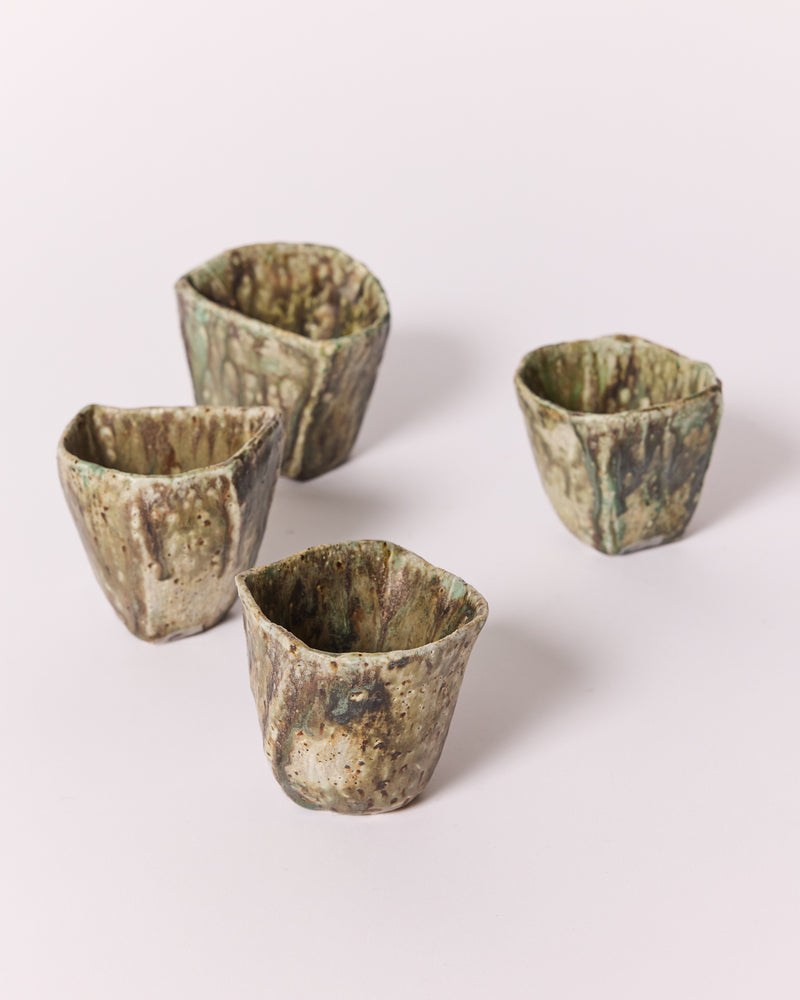
Meanwhile, contemporary Polish craft travelled to Spain under the rather marvellous exhibition title Material Imagination: Poetics of Dirty Hands. Running alongside Crafted Origins from 6 to 8 November, the show put the physical relationship between maker and material at its centre — touching, testing, experimenting and gradually learning what something will and will not allow you to do. The European Crafts Alliance has the exhibition details. Quite frankly, “Poetics of Dirty Hands” could probably serve as the unofficial motto for half of the craft world.
Looking slightly ahead, the National Museum of Ireland opens Standing Ground on 11 November, exploring the relationship between Irish craft and French couture. One of the centrepieces is a gown made entirely from hand-worked Carrickmacross lace, commissioned from artisans in County Monaghan and shown earlier this year as part of Irish designer Michael Stewart’s first couture collection in Paris. Design & Crafts Council Ireland has more information. That feels like a particularly elegant example of a heritage technique not merely surviving, but finding itself walking straight into contemporary haute couture.
And finally, because we cannot wander too far from papercraft without somebody becoming concerned, Sizzix and Tim Holtz have produced a November surprise in the form of a new Frosted Sidekick die-cutting machine. The familiar little machine has been given a refreshed translucent appearance and a new starter kit, while a new Village Upkeep die adds tiny details for paper village houses. You can see the latest Tim Holtz releases on Sizzix UK.
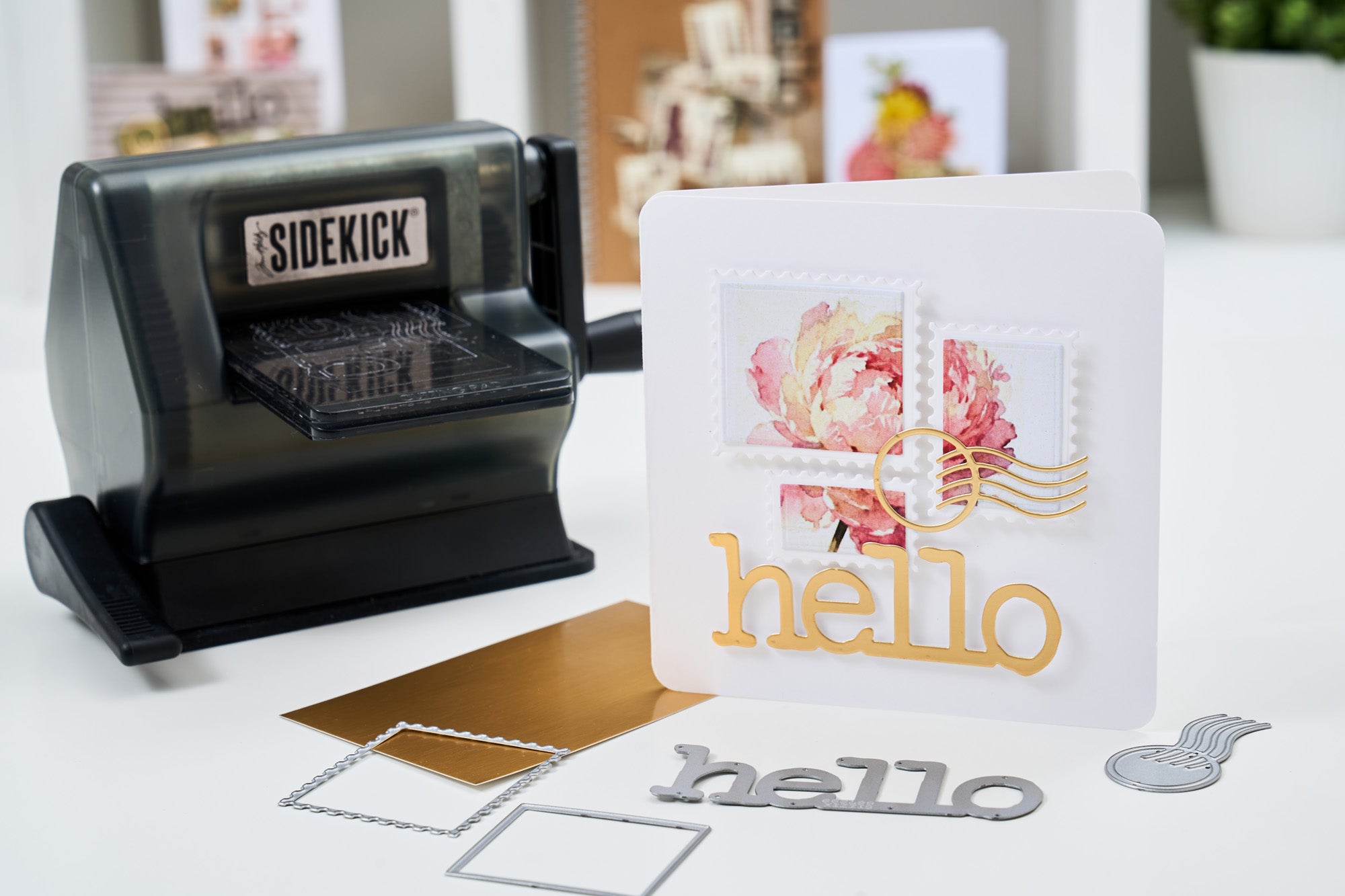
Is a frosted die-cutting machine going to alter the course of civilisation? Probably not.
Do I understand why somebody with a perfectly functional Sidekick might look at a translucent new one and briefly wonder whether they need it?
Regrettably, yes.
Small things becoming something bigger
Looking back over this fortnight, the story that makes me smile most is probably still those tiny knitted hats.
There is something rather lovely about thousands of people doing a very small thing and discovering that, collectively, it becomes quite a large thing. But that same idea runs through several of this week’s stories.
A young Japanese artisan learns a technique that has passed through generations and keeps the chain going for one more. A Scottish maker receives enough support to learn one new skill and perhaps takes their work somewhere unexpected. A European protection scheme recognises that generations of local knowledge can become part of a place’s identity. And an Irish lacemaker uses a traditional technique to create something destined for a Paris couture collection.
None of these stories is really about craft standing still. Quite the opposite. They are about people inheriting something, adding themselves to it and passing it on slightly changed.
Which sounds remarkably like crafting itself.
You start with some materials, some tools and something somebody else taught you. Then you see what happens.
Share the love!
If you find this post fun, entertaining or useful, please do consider sharing it to your fave social platform using the handy buttons below.
Also, if you are feeling flush, a coffee wouldn’t go amiss! *cheeky wink.


Ok, that’s it for this post. I hope that you have enjoyed your time here today and will subscribe to my email newsletter so that you can hear about future posts.
If have not already done so, please feel free to pop your email address in the box below and I will add you to the list (you can unsubscribe at anytime in the future if I bore you with too many).
In the meantime, thanks for stopping by and I look forward to seeing you next time!
Much love,
John.

