
Every couple of weeks, I take a wander beyond my own corner of the craft world to see what else is happening — and this fortnight has produced a rather lovely collection of stories.
There is relatively little headline-grabbing product news this time around – probably because all of the trade shows are coming up soon!
Instead, much of the interesting activity has come from people using craft in unexpected ways: knitters turning air-pollution data into textiles, Japanese artisans working with international designers, heritage skills being demonstrated alongside contemporary craft in Wales, and a major London exhibition putting the work of independent makers directly in front of the public…
When knitting becomes environmental data
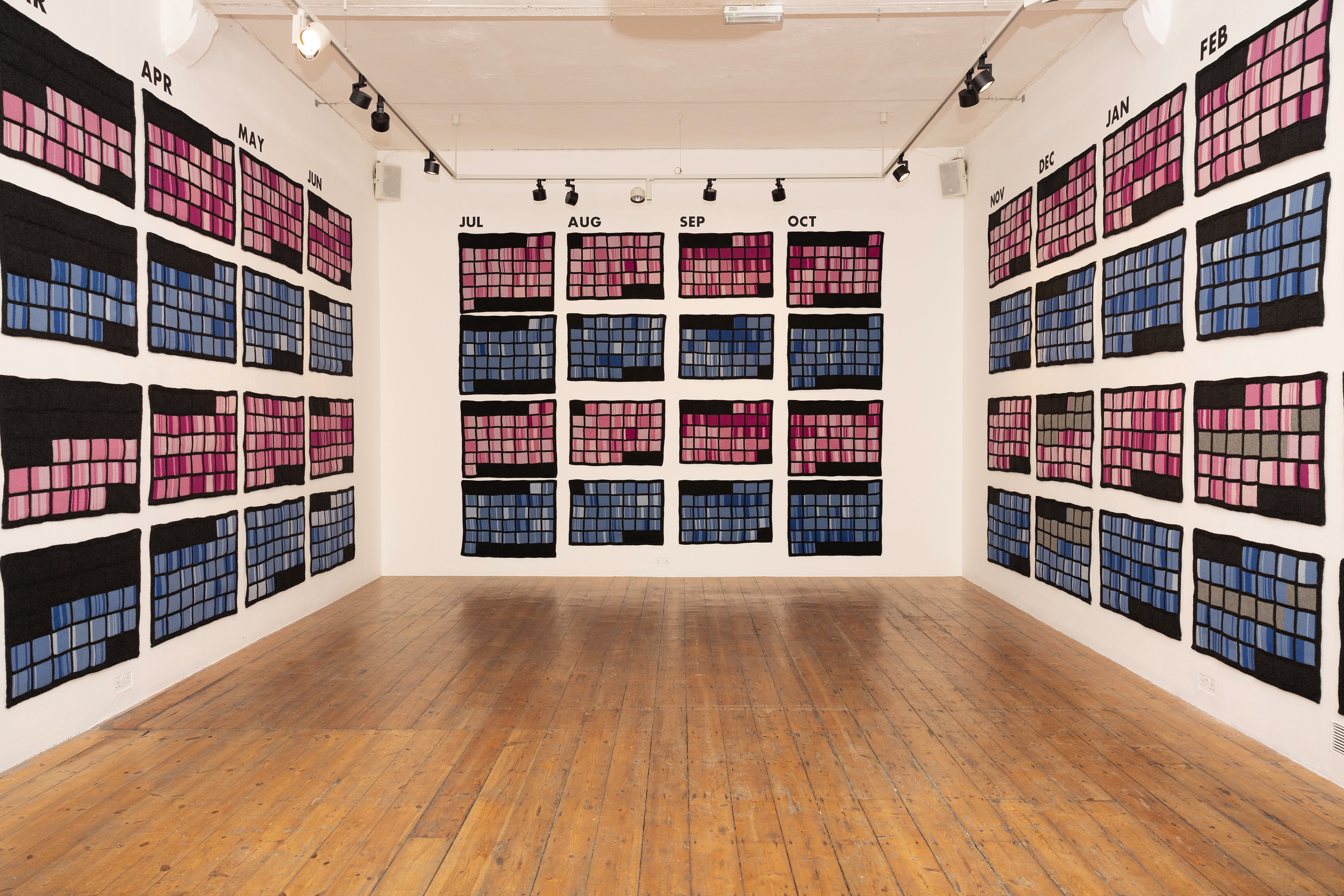
Perhaps my favourite discovery of the fortnight is a project called Knitting the Air, which opened at Bow Arts’ Nunnery Gallery in east London on 4 September.
It began with what sounds like a wonderfully strange question:
What would the air we breathe look like if we could knit it?
Over two and a half years, 132 knitters from Poplar, Bow and the wider east London community worked together to create a 13-metre-long textile based on local air-pollution readings.
The data came from two Breathe London community sensors — one near the A12 and another close to the Blackwall Tunnel approach — measuring nitrogen dioxide and fine particulate pollution.
Rather than presenting those figures as another graph on a screen, the project translated them into knitting.
The result is a huge piece of collaborative textile work in which variations in pollution become something physical, tactile and human. Bow Arts
I think this is a fascinating example of what craft can do particularly well.
Numbers can be difficult to connect with emotionally. A spreadsheet might tell us that pollution changed from one month to another, but a handmade object can give those changes a physical presence.
And knitting seems particularly appropriate because it also records time.
Every row represents another period of work. Every stitch adds to the accumulated whole. By the time the piece reaches thirteen metres long, the scale of both the environmental information and the human effort required to translate it becomes difficult to ignore.
It is also very definitely a community project rather than an artwork made by one person and displayed for everybody else to admire.
Those 132 knitters have collectively turned something invisible into something visible.
The free exhibition continues at the Nunnery Gallery until 20 September. Knitting the Air — Bow Arts
Centuries-old Japanese craft meets contemporary design
A very different form of experimentation has arrived at the Victoria and Albert Museum as part of this year’s London Design Festival.
The Craft x Tech Tokai Project, which opened on 12 September, pairs artisans from six traditional Japanese craft regions with internationally recognised designers and artists.
And despite the word “Tech” in the title, this isn’t simply a case of attaching electronics to old craft techniques.
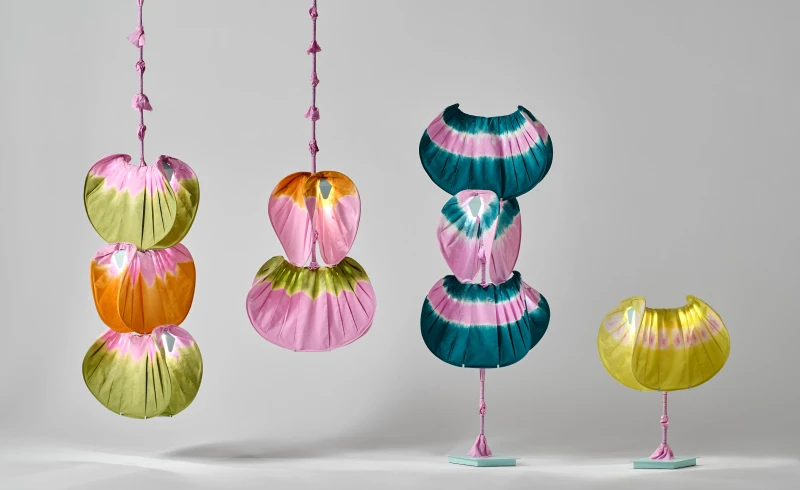
The participating traditions include Mino ceramics, Mino washi papermaking, Arimatsu-Narumi shibori dyeing, Owari cloisonné enamel, Seto painted ceramics and Iga kumihimo braiding. Each has been paired with a contemporary designer to explore how the underlying materials and skills might be used in completely new ways. Victoria and Albert Museum
One collaboration, for example, brings traditional Mino washi together with design studio Lanzavecchia + Wai.
Another combines the Japanese shibori textile tradition with British designer Bethan Laura Wood.
Elsewhere, braided kumihimo cord becomes sculptural rather than simply decorative, while traditional ceramic skills are translated into furniture and lighting.
What I particularly like here is that nobody appears to be treating heritage craft as something that has to be preserved beneath glass exactly as it was.
The skills are being preserved by using them.
That seems an important distinction.
Traditional crafts often developed because makers solved very practical problems using the materials, tools and knowledge available to them. If we freeze the finished objects but stop asking what else those skills can do, we risk preserving the appearance of a craft while allowing its creative life to disappear.
Craft x Tech takes almost the opposite approach.
Keep the knowledge.
Keep the understanding of the material.
Keep the skill.
Then ask a new question.
The exhibition is free at the V&A South Kensington and continues until the end of September. There are also hands-on workshops connected to the project, including traditional Mino washi papermaking and Iga kumihimo braiding. Victoria and Albert Museum
Craft x Tech Tokai Project at the V&A
Craft Festival Wales puts heritage skills alongside contemporary making
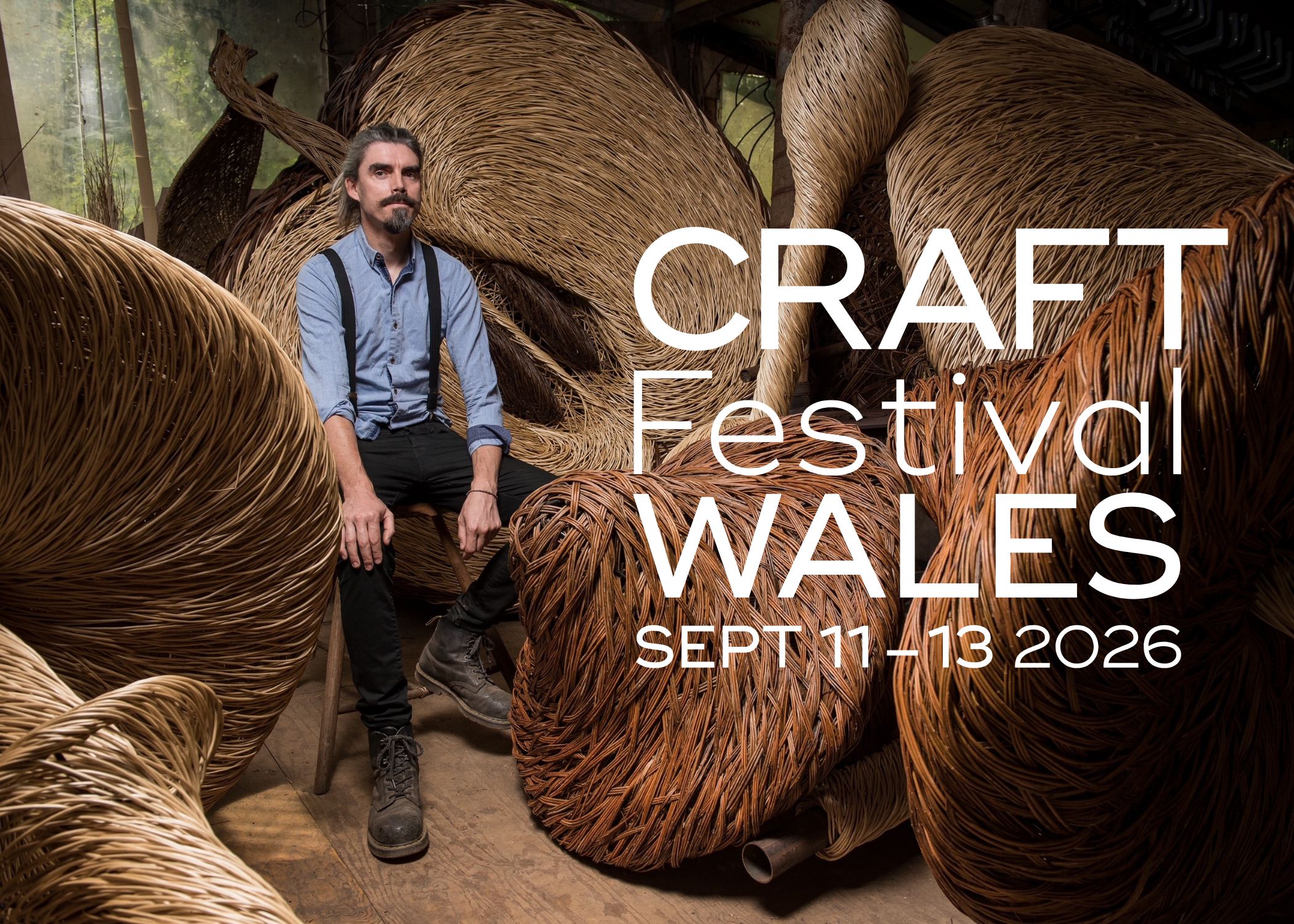
Staying with the relationship between traditional skills and modern making, Craft Festival Wales returned to Cardigan Castle from 11 to 13 September.
Around 100 professional makers from across the UK were selected for this year’s festival, covering jewellery, pottery, textiles, basketry, furniture, woodwork, glass, print and many other disciplines. Discover Ceredigion
That alone makes it an impressive celebration of contemporary craft, but one part of the programme particularly caught my attention.
Heritage Crafts brought a group of makers whose work involves rare or traditional skills, including drystone walling, enamelling and polishing, quilting and millinery.
There was also a discussion titled Living Lineage: What Does Heritage Craft Mean Today? — which feels rather timely after the Denby story in the previous roundup.
Because heritage craft isn’t simply about keeping an old object.
It is about maintaining a chain of knowledge from one maker to another.
A drystone wall can survive for generations, but if nobody learns how to construct the next one, the craft itself is still at risk.
The same applies to almost every making discipline.
Perhaps the healthiest approach is not to divide craft too neatly into “heritage” and “contemporary” at all. The interesting bit is often what happens when knowledge from one generation becomes the raw material for somebody else’s new idea.
Now, I now this one is now over but I wanted to feature it so that you can look out for it in 2027.
Heritage Crafts at Craft Festival Wales
Thirty-five makers take over the OXO Tower
Another sizeable showcase of British making opened in London on 9 September.
Crafted Futures, presented by Design-Nation at the OXO Gallery, brings together work from 35 UK designer-makers working across ceramics, jewellery, textiles, glass, wood, paper, fibre, lighting and metal.
Everything in the exhibition can be bought directly from the maker. Crafts Council
The work has been loosely grouped around four themes:
Nature & Sustainability, Heritage Reimagined, Geometric vs Organic, and Vibrancy & Calm.
There are also free Meet the Maker talks, giving visitors the opportunity to hear about the processes, materials and ideas behind the finished work.
That direct connection between maker and audience is something I keep noticing in these roundups.
We saw it previously in the new craft shops combining retail with workshops and community space. This fortnight it appears again through exhibitions and festivals that don’t simply display things but actively put the people who made them in front of the public.
Perhaps there is a wider appetite for knowing who made something, how they made it and why.
And when mass-produced objects are available almost instantly and often remarkably cheaply, that story may be one of handmade craft’s greatest strengths.
Crafted Futures runs until 20 September and admission is free.
Crafted Futures — Crafts Council

Around the craft world
There has been a lot happening in yarn and textiles this fortnight.
The new Newark Knitting & Wool Show took place on 5 and 6 September with around 90 exhibitors, alongside workshops and demonstrations covering knitting, crochet, spinning, weaving, feltmaking and other fibre crafts. Newark Showground
Then, on 11 and 12 September, unravel… autumn returned to Farnham Maltings, bringing together independent yarn producers, established makers, first-time exhibitors, workshops and talks. Farnham Maltings
Papercraft, sewing and mixed-media makers also had a sizeable gathering at The Creative Craft Show and The Stitching Show in Farnborough from 10 to 12 September, with workshops, demonstrations and make-and-take sessions spanning everything from quilting and embroidery to jewellery and papercraft. The Creative Craft Shows
Jewellery has been having something of a moment too.
I Wanna Be Adorned — Manchester Jewellery Week began on 10 September, bringing together jewellers, designer-makers, artists, students and collectors across a programme of exhibitions, workshops, open studios and talks. Crafts Council
And for anyone who thinks a handmade mug deserves rather more attention than merely containing the tea, the Wardlow Mires Pottery Festival took place on 12 and 13 September with around 80 potters from across the UK, all focused specifically on functional ceramics. Pots for Food
There is something rather pleasing about an entire festival dedicated to objects that are both beautiful and expected to survive breakfast.
Share the love!
If you find this post fun, entertaining or useful, please do consider sharing it to your fave social platform using the handy buttons below.
Also, if you are feeling flush, a coffee wouldn’t go amiss! *cheeky wink.


Ok, that’s it for this post. I hope that you have enjoyed your time here today and will subscribe to my email newsletter so that you can hear about future posts.
If have not already done so, please feel free to pop your email address in the box below and I will add you to the list (you can unsubscribe at anytime in the future if I bore you with too many).
In the meantime, thanks for stopping by and I look forward to seeing you next time!
Much love,
John.

